Customer Centricity- Four Big Decisions, Not Just One

Customer centricity is one of the most widely discussed concepts in management, yet it remains one of the least understood. In this paper, Bernie Jaworski argues that customer centricity is not simply a mindset, a marketing philosophy, or a commitment to listening to customers. Rather, it is an organization-wide capability grounded in four strategic decisions: how to win, where to play, how to shape markets, and what to abandon. Drawing on examples ranging from Southwest Airlines and Intuit to NVIDIA and Microsoft, Jaworski demonstrates that organizations create advantage not by collecting more customer insights, but by using those insights to make evidence-based choices that competitors either cannot or will not make.

The paper goes beyond the traditional customer-centricity conversation by examining why so many organizations struggle to act on what they learn. Through dialogue with scholars and senior executives, Jaworski explores the organizational barriers that prevent customer insight from influencing strategy, including entrenched assumptions, resistance to abandonment, and structures that separate decision-makers from customers. The result is a broader view of customer centricity as a leadership and organizational challenge—one that requires curiosity, willingness to question existing beliefs, and the ability to create value not only for customers but across the broader ecosystem of stakeholders involved in delivering that value.

Read the article here.
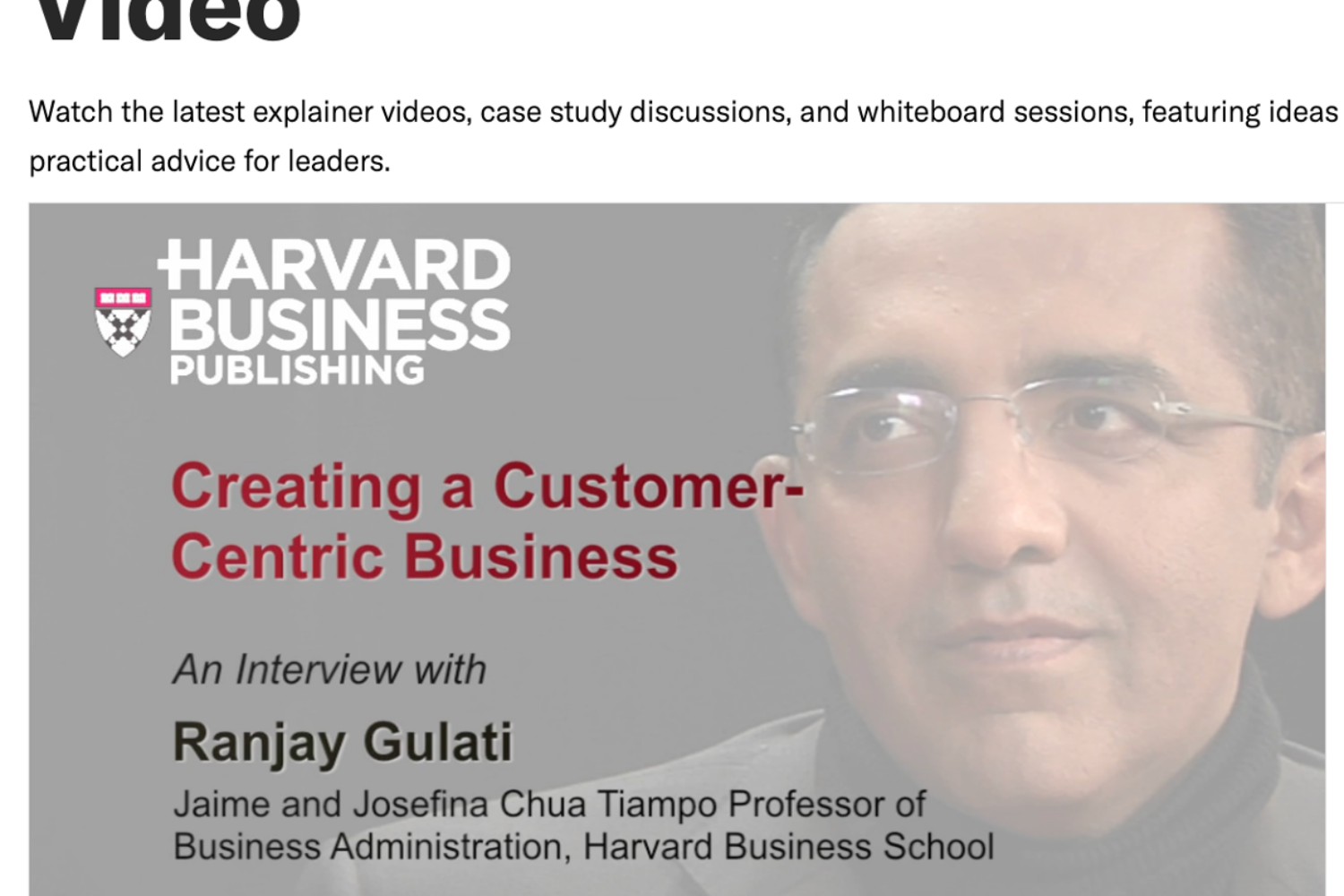
Creating a Customer-Centric Business

Professor Ranjay Gulati argues that truly customer-centric organizations adopt an “outside-in” perspective, beginning with customers’ needs, challenges, and desired outcomes rather than with the products, services, or internal structures of the company. In this Harvard Business Review presentation, Gulati contends that many organizations remain trapped in an “inside-out” mindset, where decisions are shaped primarily by existing products, organizational silos, and internal priorities. He suggests that customer-centricity requires leaders to immerse themselves in customers’ worlds, develop a deep understanding of the problems they are trying to solve, and ensure that customer needs become a central consideration in strategic decision-making.

A central theme of Gulati’s perspective is that customer-centricity is as much an organizational design challenge as it is a customer understanding challenge. He argues that many firms should move beyond traditional product- or function-based structures and organize more directly around customer groups and customer needs. This aligns with CCG’s belief that organizations must overcome internal silos and adopt an outside-in perspective. However, CCG would view customer-segment-based organizational structures as one possible path to customer-centricity rather than a prerequisite. In CCG’s framework, customer-centricity is defined less by how an organization is structured and more by its ability to understand customers, create value for a defined target market, and align decision-making throughout the enterprise around those insights.

Watch the video here.

Customer Centricity Explained: Culture, Climate & CX

The video Customer Centricity Explained: Culture, Climate & CX argues that customer centricity is fundamentally a cultural challenge rather than a customer experience initiative. The presenter contends that organizations often focus on improving customer-facing processes and technologies while overlooking the internal culture and workplace climate that shape employee behavior. According to the video, customer-centric organizations create environments where employees understand customer needs, are empowered to act on them, and are supported by leadership, processes, and incentives that reinforce customer-focused decision-making.

A central theme of the presentation is the relationship between culture, employee behavior, and customer outcomes. The video proposes that positive customer experiences are largely the result of organizational cultures that encourage employees to prioritize customer needs and act in ways that create value. While this perspective aligns with CCG’s view that culture is a critical enabler of customer centricity, CCG would place greater emphasis on customer understanding as the starting point. In this view, culture, leadership, and employee engagement are important because they help organizations better understand and serve customers, making them essential enablers of customer-centricity rather than the ultimate objective.

Watch the video here.

Customer Centricity: A Definition, Examples, & Best Practices

This article is a fairly representative example of how customer centricity is discussed in the customer experience (CX) community. The author defines customer centricity as a business approach that places customer needs, expectations, and experiences at the center of decision-making and argues that organizations benefit through increased loyalty, retention, advocacy, and revenue growth. The piece emphasizes practices such as gathering customer feedback, personalizing experiences, mapping customer journeys, breaking down organizational silos, and using customer data to improve interactions. Throughout the article, customer centricity is presented primarily as a means of improving customer experiences and strengthening relationships between organizations and customers.

From a CCG perspective, there is significant overlap but also an important distinction. The article largely approaches customer centricity through the lens of customer experience management, whereas CCG views customer centricity as a broader organizational philosophy and strategic orientation. The article focuses heavily on serving existing customers better through personalization, feedback collection, and experience optimization. CCG would agree that these activities are important, but would extend the definition to include understanding a defined target market, learning from both customers and non-customers, making evidence-based decisions, and aligning the entire organization—not just customer-facing functions—around creating customer value. In other words, the article tends to treat customer centricity as a set of customer-focused practices, while CCG defines it as a company-wide way of operating that influences strategy, innovation, resource allocation, culture, and decision-making.

Read the article here.

How Developing A Consistent Customer-Centric Culture Helps A Business

The IDEO U article, based on a discussion with Leslie Witt, argues that customer centricity is fundamentally an organizational commitment to understanding, listening to, and responding to customer needs. Rather than focusing primarily on customer experience programs or satisfaction metrics, Witt emphasizes building a culture where employees across the organization are empowered to act in the customer’s best interest. A central theme of the article is that customer centricity begins with clearly defining the customer benefit the organization provides and ensuring that decisions, products, and services are consistently aligned with delivering that benefit. The article also encourages organizations to look beyond their current customers and continuously learn from underserved or overlooked audiences.

One of the more distinctive aspects of Witt’s perspective is her emphasis on employee experience as a foundation for customer centricity. She argues that organizations often focus excessively on financial outcomes while underinvesting in the employee and customer conditions that drive long-term success. While this perspective aligns with CCG’s view that culture is a critical enabler of customer centricity, CCG would distinguish between employee-centricity and customer-centricity. Employees play a vital role in creating customer value, but the ultimate objective remains understanding and serving customers rather than optimizing employee satisfaction as an end unto itself. In this view, customer-centric organizations hire, develop, and reward employees who are committed and equipped to help the organization better understand and create value for customers.

Read the transcript here.

True customer-centricity: An operating model for competitive advantage

The McKinsey article True Customer-Centricity: An Operating Model for Competitive Advantage argues that customer centricity is not primarily a customer experience initiative—it is an operating model. The authors contend that many digital transformation efforts fail because organizations focus on implementing new technologies rather than redesigning the business around customer needs. To address this challenge, they propose a “customer-back business model” in which processes, capabilities, organizational structures, and technology investments are organized around creating customer value. The article emphasizes cross-functional collaboration, end-to-end process redesign, and the strategic use of AI and digital technologies to improve both customer outcomes and business performance.

From a CCG perspective, there is substantial alignment with the article’s central premise that customer centricity must extend beyond marketing and customer-facing functions. McKinsey’s focus on redesigning the operating model around customer needs is highly consistent with CCG’s view that customer centricity is a company-wide discipline that influences how organizations make decisions, allocate resources, and create value. Where CCG would likely place additional emphasis is on the role of empathy, evidence-based customer understanding, and maintaining a clear focus on a defined target market. McKinsey’s framework is largely operational and transformation-oriented, whereas CCG’s definition begins with understanding the market through the eyes of customers and then aligning the organization accordingly. Together, the two perspectives reinforce the idea that customer centricity requires both deep customer understanding and organizational systems capable of acting on those insights.

Read the article here.

6 Ways to Build a Customer-Centric Culture

The Harvard Business Review article 6 Ways to Build a Customer-Centric Culture argues that the greatest barrier to customer centricity is not a lack of customer data, technology, or strategy—it is organizational culture. Denise Lee Yohn contends that companies become customer-centric when they intentionally shape employee behaviors and decision-making around customer needs. To accomplish this, she proposes six practices: operationalizing customer empathy, hiring for customer orientation, democratizing customer insights, facilitating direct customer interaction, linking employee culture to customer outcomes, and tying compensation to customer-centric behaviors and results.

The article positions customer centricity as a company-wide responsibility rather than a function owned by marketing, sales, or customer service. Throughout the piece, Yohn emphasizes that employees at every level should understand customers, interact with them when possible, and be held accountable for the customer outcomes their work influences. This perspective aligns closely with CCG’s view that customer centricity is fundamentally an organizational capability—one that requires leadership commitment, cultural reinforcement, and cross-functional adoption rather than isolated customer experience initiatives.

Read the article here.

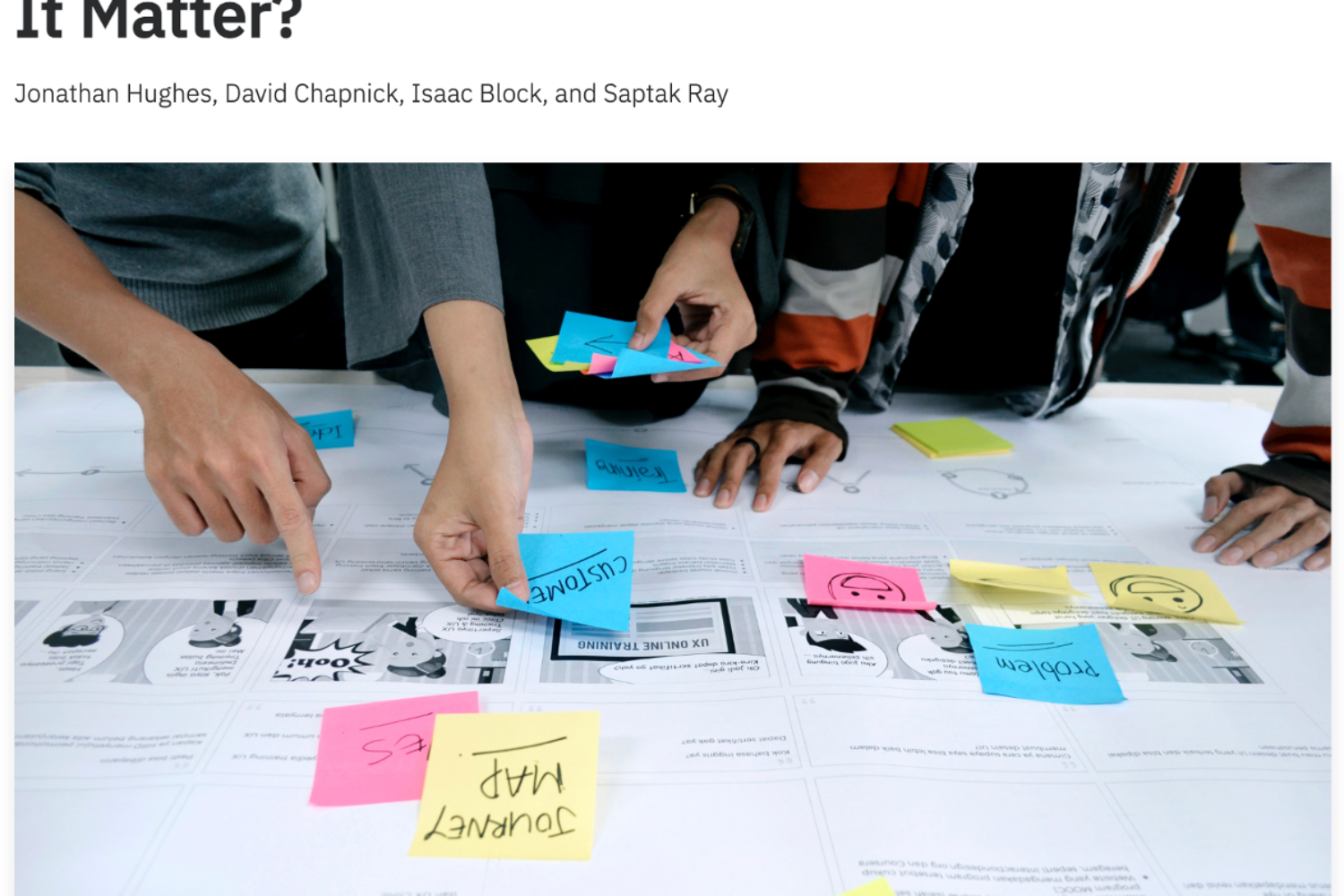
What is Customer-Centricity, and Why Does It Matter?

The Berkeley Haas article argues that customer centricity has become a strategic imperative because customers increasingly have more choices, more information, and greater influence over business success than ever before. The authors define customer centricity as an enterprise-wide commitment to creating value for customers and aligning the organization around customer success. Importantly, they contend that genuine customer centricity extends far beyond customer service or marketing. It requires organizations to break down functional silos, coordinate activities across departments, and ensure that decisions throughout the business are informed by a clear understanding of customer needs and outcomes.

The article also presents customer centricity as a maturity journey, suggesting that relatively few organizations operate in a truly customer-centric manner. According to the authors, the most advanced firms embed customer-centric thinking into their culture, incentives, processes, and leadership practices, creating a consistent focus on delivering value to customers over the long term. For readers interested in customer-centric transformation, the piece offers a useful framework for assessing organizational maturity and understanding the structural and cultural changes required to move beyond customer-focused rhetoric toward customer-centric execution.

From a CCG perspective, there is substantial alignment with our view that customer centricity must be company-wide rather than confined to commercial functions. The article’s emphasis on organizational alignment, cross-functional integration, and customer value creation is highly consistent with our thinking. Where CCG would extend the discussion is in emphasizing the role of evidence-based decision-making, empathy, and maintaining a clear focus on a defined target market while remaining open to learning from non-customers.

Read the article here.

The Organic Growth Playbook: Activate High-Yield Behaviors To Achieve Extraordinary Results – Every Time

The Organic Growth Playbook by Bernard Jaworski and Robert Lurie tackles one of the most persistent challenges facing business leaders: how to generate sustained growth without relying on acquisitions. The authors argue that conventional marketing approaches—particularly those centered on product differentiation and positioning—often fail to produce meaningful growth in highly competitive markets. Instead, they propose a different framework built around identifying the small number of “high-yield behaviors” that have the greatest influence on purchase decisions. The book contends that growth comes not from changing what customers think about a product, but from changing what customers actually do throughout the buying process. Drawing on decades of consulting work with large organizations, the authors provide a systematic methodology for mapping customer journeys, identifying pivotal decision points, and influencing behaviors that drive revenue growth.

A central contribution of the book is its shift from a product-centric to a behavior-centric view of growth. Jaworski and Lurie argue that organizations should focus less on communicating product advantages and more on understanding the entire purchase process, segmenting customers based on their propensity to engage in key behaviors, and investing disproportionately in the moments that matter most. The framework is designed to help companies uncover overlooked growth opportunities and allocate resources more effectively by concentrating on the few behaviors that have outsized impact on business performance. The result is a practical playbook for managers seeking faster organic growth through a deeper understanding of customer decision-making and behavior change rather than through traditional marketing tactics alone.

From a CCG perspective, the book is particularly noteworthy because it moves beyond customer attitudes and perceptions to focus on customer behavior. While CCG places greater emphasis on empathy, customer understanding, and organizational alignment around a defined target market, the two approaches are highly complementary. Both begin with a deep understanding of customers, but The Organic Growth Playbook extends that understanding into a disciplined framework for influencing behavior and accelerating growth. As such, it represents one of the more practical and actionable contributions to the customer-centric growth literature.

Get the book here.

The Soul of Strategy

The Soul of Strategy by Bernard J. Jaworski and David E. Sprott challenges traditional approaches to strategy that place competitors, markets, or internal resources at the center of strategic planning. Instead, the authors argue that the customer is the true “soul” of strategy and should be the starting point for every major organizational decision. Building on the work of Peter Drucker, the book contends that the primary purpose of any organization is to create and keep customers. To achieve this, organizations must develop deep, actionable customer insights and use them to guide strategic choices, innovation efforts, and resource allocation. The authors introduce a customer-centric strategy framework and a “Customer Choice Cascade” designed to help leaders systematically understand customer behavior and create superior customer value.

The book also explores the organizational capabilities required to translate customer understanding into sustained competitive success. Rather than treating customer centricity as a marketing initiative, Jaworski and Sprott position it as a company-wide discipline involving leadership, governance, organizational design, customer intelligence, innovation, and even strategic abandonment of activities that no longer create value. Throughout the book, they argue that enduring advantage comes not from outperforming competitors directly, but from developing a deeper understanding of customers and organizing the firm around their evolving needs. The result is a comprehensive framework that reframes strategy through a customer-centric lens and offers practical guidance for leaders seeking to make customer understanding the foundation of organizational success.

From a CCG perspective, the book is notable because it moves customer centricity out of the realm of marketing and customer experience and places it squarely within the discipline of strategy. While there are nuances where reasonable scholars may differ on definitions and implementation, its central argument—that customer understanding should be the starting point for strategy formulation rather than an afterthought—is highly consistent with CCG’s view of customer centricity as a company-wide orientation that shapes decisions across the organization.

Get the book here and read Chapter 4 here.

Let’s Work Together

We engage with organizations pursuing sustained, organic growth with intent and rigor. If that’s you, we’re listening.